As the novel coronavirus spreads throughout the world, Aqua-Chem is working to support pharmaceutical and vaccine manufacturers across the globe as they race to find a cure. Right now our water is being used in the clinical trials of some of the leading COVID-19 vaccine candidates in the U.S. Even more exciting, we are proud to know that the water we produce is already being used to manufacture many of the first vaccines that will be shipping throughout North America in the coming months.
Water is the primary ingredient in many pharmaceuticals and is a critical, highly regulated ingredient in all vaccines, both as a diluent and as a carrier. Aqua-Chem’s President and CEO, Gary Edwards noted, “Aqua-Chem is deeply committed to supporting the fight against COVID-19. Our whole team knows that our equipment is on the frontlines of the fight against COVID-19. From our vapor Compression Distillers to Pure Steam Generators and Ambient WFI Membrane systems our whole team is committed to engineering and building systems that reliably deliver high-quality water for critical needs. “
As we all look forward to a “post-pandemic” world, Aqua-Chem is helping the pharmaceutical and health care industry combat the pandemic- and that’s a responsibility that we all take personally.
Aqua-Chem, Inc. Announces Beverage Reverse Osmosis System
[Serving the Beverage Industry with Clean Water Technologies]
Knoxville, TN: Aqua-Chem, Inc. today announced the launch of their Beverage Reverse Osmosis Systems targeted at meeting the needs of the growing beverage industry and engineered to deliver a low total cost of ownership. Aqua-Chem has developed arange of standard designs and can draw from years of experience to create the most efficient and sustainable system to meet your needs. Both single and double-pass configurations are available to meet a variety of product water quality requirements. Reverse Osmosis Systems are designed to produce purified ingredient water for beverage applications. Aqua-Chem RO systems incorporate energy-saving RO membranes and vertical multistage pumps forlow maintenance and long life. Aqua-Chem Reverse Osmosis systems use membranes from a variety of suppliers making the customization of these systems unlimited. Aqua-Chem Reverse Osmosis units integrate the pretreatment and polishing processes with the control system. Aqua-Chem’s Beverage Reverse Osmosis Systems are used in producing bottled water, juices, teas, carbonated drinks, sports drinks, energy drinks, alcoholic beverages, and more.
“We are so excited about the versatility of this line of Reverse Osmosis Systems. Not being tied to one membrane supplier has tremendously opened up the customization possibilities for Aqua-Chem to engineer an efficient and sustainable system that delivers a low total cost of ownership.” says Jeffrey Okun, Vice President of Sales at Aqua-Chem “These Reverse Osmosis Systems are a great addition to the complete Aqua-Chem water room system for the beverage industry.”
Features and benefits of Aqua-Chem’s Beverage Reverse Osmosis System include.
Complete integration of pretreatment and polishing process in one control system.
Convenient sample ports for easy monitoring.
Aqua-Chem’s field service team supports you during and after commissioning
We offer operator training, preventative maintenance programs, and more.
Fully programmable alarm conditions customized to your system requirements. Alarms can be fixed or adjustable.
Single and Double Pass Configurations are available with standard nominal product flow ranges of 100 gpm to 400 gpm. Other flow rates are available, to meetthe needs of your facility.
Aqua-Chem’s Reverse Osmosis systems have various upgrades available such as integrated Concentrate Recovery to increase water efficiency, hot water sanitization features, and Stainless-Steel membrane vessels. Aqua-Chem also offers pretreatment options and ultraviolet disinfection and more as a part of the complete Aqua-Chem beverage water room offering. Beverage Reverse Osmosis Systems are available immediately and can be custom engineered to perfectly complement your existing water purification system. For more information on Reverse Osmosis Systems for beverage applications visit aqua-chem.com/beverage-reverse-osmosis/
Reverse Osmosis Units are a part of Aqua-Chem’s full water room design, which is based on decades of experience in the manufacture of water for beverage production and includes:
Aqua-Chem, Inc. Announces Carbon Tower Product Line
[Serving the Beverage Industry with Clean Water Technologies]
Aqua-Chem, Inc. announces the launch of their Carbon Tower product line targeted at meeting the needs of the growing beverage industry and engineered to deliver a lower total cost of ownership than many other technologies on the market. Aqua-Chem’s carbon towers are suitable for any application requiring steam or hot water sanitization and are constructed out of NSF 61 approved materials. The Aqua-Chem Carbon Tower utilizes bituminous coal to provide clean water for use in bottled water, juices, teas, carbonated drinks, sports drinks, energy drinks, alcoholic beverages and more. Aqua-Chem’s Carbon Tower is energy efficient and offers a sustainable method for beverage manufactures to remove Chlorine, Chloramines, and Organics from their supply water.
“The carbon tower line is a highly customizable component that integrates seamlessly into almost any beverage facility,” says Jeffrey Okun, Vice President of Sales at Aqua-Chem “Aqua-Chem is always looking for innovative solutions to provide clean water in the most sustainable manner possible.”
Standard Features:
Aqua-Chem offers standard carbontowers capable of processing 200-450 gallons per minute. Customized designs, including larger and smaller carbon towers are also available.
316L Stainless Steel and other NSF 61 approved materials assure no materials are leached our extracted from the equipment into the water.
Optimized both the flow rate and empty bed contact time to provide you with the best quality water while maximizing the utilization of your carbon and meeting production goals. (1 gpm/ft3 flow-rate for 7.5 min EBCT)
1-1.5x service flow backwash rate to reduce wastewater and save time.
A media retaining, slotted screen strainer is utilized to maximize carbon capture within the Tower. The design eliminates the need for support bed material, increasing the effective carbon surface area available for filtering.
Backwash rates can be varied to meet individual facility requirements and seasonal fluctuations in water temperature. Effective carbon tower operation is highly dependent on the effectiveness of the backwash process. The appropriate freeboard within the tower provides flexibility within the backwash process to achieve optimal effectiveness.
Inlet/outlet pressure, outlet flow, and vessel temperature monitoring assure temperature control during the steam cycle.
Upgrades:
Automatic backwash assures consistent performance with less effort.
Automatic steam or hot water sanitization processes increase the efficacy of the VOC removal and sanitization.
Electropolished tank and face piping for a superior surface finish.
Aqua-Chem’s Carbon Towers are available immediately, with short lead-times and can be customized engineered to perfectly compliment your existing water purification system. For more information on Beverage Carbon Towers visit https://aqua-chem.com/carbontowerfiltration/
Carbon Towers are a part of Aqua-Chem’s full water room design, which is based on decades of experience in the manufacture of water for beverage production and includes:
2020 FOYA Category Winner for Facility Integration
Pfizer, Inc.
Aqua-Chem recognized as WFI Equipment Supplier to ISPE- FOYA 2020 Pfizer
Location: Andover, Massachusetts, USA
Project: Pfizer Building E – Andover Clinical Manufacturing Facility
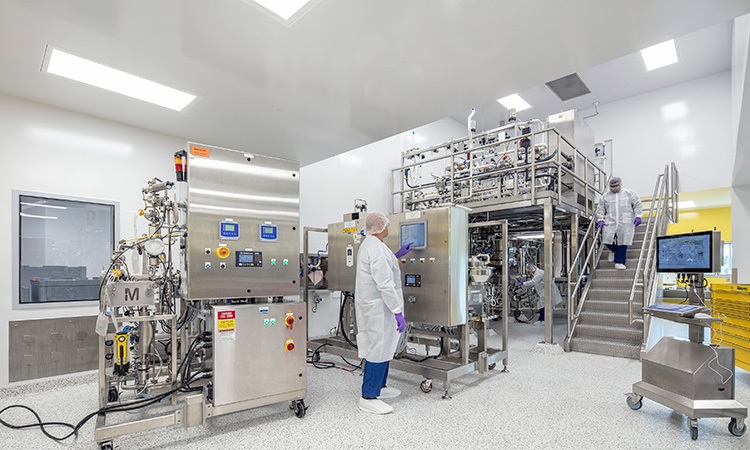
In 2015, Pfizer launched “Project Indigo” to relocate clinical manufacturing capabilities from Chesterfield, Missouri, to the new 175,000 sq. ft., state-of-the-art Andover Clinical Manufacturing Facility (ACMF) on the existing Pfizer Andover, Massachusetts, campus. The move was made to expand clinical biological drug substance manufacturing capacity from 14 to 21 campaigns per year, while vertically integrating the Andover site through the co-location of early phase clinical manufacturing with large scale commercial manufacturing that was existing on the site. With respect to scope, the ACMF is a five-story building, housing five independent manufacturing suites, dedicated to the development of new biotherapeutics and vaccines to support trials in disease areas including: oncology, rare diseases, infectious diseases, hemophilia, and rheumatoid arthritis. Capabilities include cell culture, microbial fermentation, associated downstream purification operations, and the required support areas for solution preparation.
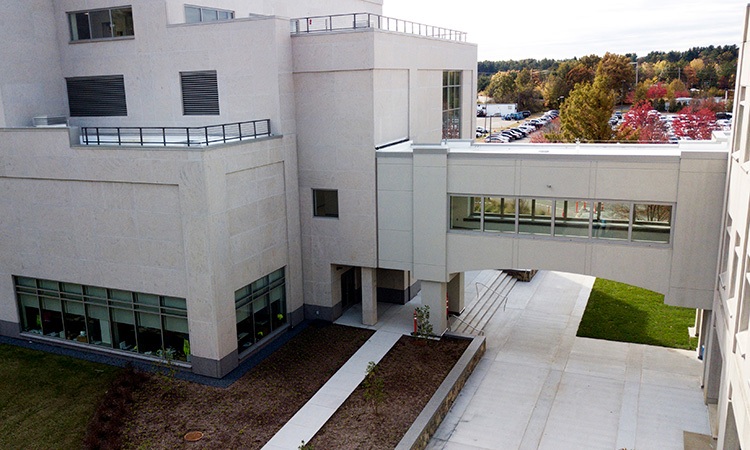
The ACMF project design allows for integration on several levels. Physically, the building is located next to an existing R&D facility and the existing commercial manufacturing facility is connected by an elevated bridge that creates convenient, controlled paths for the movement of personnel, equipment, and drug substances and product without stepping outdoors. Clinical manufacturing occurs independently within five suites across two floors. To mitigate the risk of cross contamination, there are no crossties between any of the suites. Most of the equipment is mobile and skid-based, enabling the transfer of materials from the R&D process innovations team (in Building F) to the ACMF and from the ACMF across the connecting bridge to commercial manufacturing (in Building B). Thanks to very effective master planning over the years, ACMF was able to use the existing site infrastructure (utilities, warehouse, support services, etc.)
From an operational perspective, facility integration was achieved through five tactical mandates: multi-host, multi-platform, configurable suites, portable systems, and wireless controls. The ACMF was designed to accommodate both microbial and mammalian cell capabilities recognizing the elevated perceived risk of cross contamination. This risk has been mitigated through strict product segregation protocols implemented in the very design of the building and the paths, in the physical independence of each manufacturing suite, and through strict procedural controls. With respect to multi-platform, the facility was designed with three suites having single-use disposable systems and two having more traditional stainless-steel platforms, which mirror capabilities across Pfizer R&D and commercial capabilities globally. Each suite provides maximum flexibility in regard to configurability. With almost no permanent installations and with all equipment and process control systems on wheels or skids, each suite can be configured to handle even the most complex processes and then be easily changed to meet a future need. With such an emphasis on equipment portability and suite configurability, careful planning was required to enable connectivity, process automation, and data collection. To meet this need, the ACMF facility utilizes a wireless DeltaV automation system that demanded a more comprehensive automation systems integration effort than required in a wired implementation to ensure that all skids and all equipment operate as intended. In addition to wireless process automation, the facility also employs wireless asset tracking to avoid losing track of any of the highly mobile portable process skids.
Behind the physical and operational innovations is “intellectual innovation” that is foundational to the siting of this facility on the Andover campus. By locating ACMF in Andover, Pfizer brought together R&D, clinical manufacturing, and commercial manufacturing colleagues and all the knowledge, expertise, and insights acquired over three decades of biological drug development experience into one location. This co-location is much more than a matter of convenience. Close and continuous collaboration among all Andover site teams enables the integration of the intellectual capital at the heart of Pfizer’s biologics enterprise. Formal cross-staffing programs place commercial manufacturing colleagues in clinical manufacturing roles to promote the continuous transfer of knowledge and skills. Moreover, the site data historian captures data and information generated by all process development activities at Andover- from bench to pilot to clinical and commercial manufacturing. The data historian is a single repository for all process knowledge and lessons learned from process conception through to commercial manufacturing.
Overall, the ACMF proves that a sustainable, flexible, configurable, and wireless clinical manufacturing facility can achieve complete integration into a dynamic, high-performance process development flow today and preserve that integration no matter how biologic drug development may evolve in years to come. Based on the many levels that Pfizer incorporated facility integration into the Andover Clinical Manufacturing Facility, this project is recognized with the 2020 FOYA Facility Integration Award.
Supply Partners and Key Participants:
Manufacturer/Owner Name – Pfizer Inc. Engineer/Architect (A&E) – CRB Construction Manager – Lendlease Piping Subcontractors –
Decco, Inc. (process)
TG Gallagher Mechanical Contractors
HVAC Subcontractor – McCusker Gill Inc. Automation and Control Suppliers –
Schneider Electric (Building Automation)
Hallam-ICS (Instruments & Controls)
Major Equipment Suppliers/Contractors
WFI Generation Equipment – Aqua Chem Inc.
Media and Buffer Prep Skids – Integrated Process Engineers and Constructors Inc. (IPEC)
Bioreactor and CIP Skids – A&B Process Systems Corp.
Disposable Bioreactors, Chromatography Columns and Skids – GE HEALTHCARE